


Modern manufacturing has experienced a significant transformation with the integration of Computer Numerical Control (CNC) plastic machining. This technology delivers unparalleled accuracy while addressing the growing need in industries for complex, high-performance parts. Whether in aerospace, medical, or electronics, manufacturers continuously seek better ways to produce components that meet strict quality requirements. The ongoing evolution of CNC machining, especially within the plastic components sector, promises to redefine industry benchmarks in the coming years. Discover how advanced CNC plastic machining is helping reshape manufacturing value chains and deliver competitive advantages.
As CNC technologies progress, new opportunities arise for producing intricate designs and leveraging improved materials that were once considered impractical. The result is a more agile, efficient, and innovative approach to manufacturing that drives both performance and sustainability.
Advancements in CNC Plastic Machining
Technological improvements in CNC plastic machining have brought about unprecedented advances in precision and control. Modern CNC systems can routinely achieve tolerances in the sub-micron range, dramatically increasing the reliability of machined parts. The development of advanced multi-axis CNC machining centers has made it possible to fabricate highly complex shapes, drastically reducing the number of manufacturing steps required. This leap in precision and capability has catered to industries like semiconductors and advanced optics, where even the slightest deviation can lead to product failure.
Additionally, high-speed machining and surface finishing technologies reduce post-processing efforts and lead times. Advances in computer-aided design and manufacturing software enable engineers to quickly adapt to changing requirements and to optimize every aspect of the process, from tool selection to cutting strategies. These refinements play a key role in supporting industries with tight schedules or those operating in highly competitive markets.
Emerging Materials and Techniques
Recent years have seen the introduction of many high-performance plastics designed specifically for CNC machining, including reinforced grades of PEEK, PPS, and PVDF. Materials like these exhibit superior strength-to-weight ratios, chemical resistance, and dimensional stability under stress or temperature extremes. Their use is growing fast in fields such as medical device manufacturing and electronics. To maximize these benefits, machinists are developing and refining advanced machining techniques, such as adaptive toolpaths that respond to changing material properties in real time.
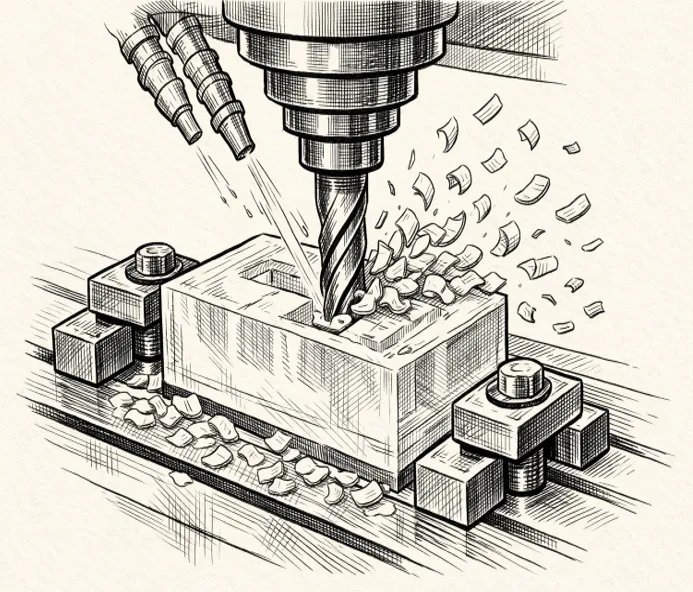
Specialized tooling and cooling solutions are now commonplace, making it possible to achieve consistent results with notoriously challenging materials. Enhanced workholding systems, improved chip evacuation, and advanced lubrication further increase the quality of the final component and extend the lifespan of machining tools. For more insights into the properties and performance of advanced polymers in machining, you can visit resources such as MCAM’s PEEK plastics.
Automation and AI Integration
The rise of automation and artificial intelligence (AI) is transforming CNC plastic machining into a smart manufacturing discipline. Automation reduces manual intervention and addresses labor shortages, while advanced robotics ensures consistent operation around the clock. AI brings a new level of intelligence to the process, analyzing sensor data in real time and adjusting machine settings on the fly to maximize both output and quality.
AI-driven predictive maintenance systems can spot warning signs of tool wear, chatter, or abnormal vibration before they lead to costly downtime. By analyzing historical and live data streams, these systems can refine manufacturing parameters continuously, leading to productive gains and lower scrap rates. The combination of automation and AI is allowing manufacturers to achieve leaner operations and higher reliability, with benefits extending across global supply chains.
Applications in Modern Manufacturing
CNC-machined plastic components are vital across diverse industrial segments. Aerospace manufacturers depend on lightweight yet robust parts for precision assemblies. The medical field uses CNC machining to fabricate biocompatible elements such as custom implants, surgical instruments, and diagnostic housings. In the electronics sector, machinable plastics offer superior insulation, chemical resistance, and adaptability for quick prototyping and short-run production.
Each of these industries benefits from the rapid prototyping capabilities afforded by modern CNC systems. Developers can quickly move from digital models to tangible prototypes, speeding up the path to market and minimizing costly iterations. More information on how CNC plastic machining is impacting healthcare can be found at MD+DI Online, which covers innovation in medical device development.
Challenges and Solutions
While CNC plastic machining has come a long way, manufacturers still face significant challenges. Selecting the right material is often complicated by the wide variety of plastics available and the application-specific requirements for each. Tool wear and heat generation during machining can affect part accuracy and put pressure on operational costs. Manufacturers are increasingly investing in R&D to produce more resilient tools and optimize cooling strategies to tackle these issues.
To further address these hurdles, companies are implementing predictive monitoring systems and digital twins to visualize and optimize processes before actual machining begins. This forward-thinking approach allows for real-time adjustments, proactive maintenance, and data-driven decision making, all of which contribute to improved efficiency and reduced downtime.
Future Outlook
The next decade promises further advancements in CNC plastic machining. Development of new thermoplastics, composites, and nanomaterials will broaden application possibilities. The integration of smart sensors and the growing use of Internet of Things (IoT) devices will enable intricate monitoring and control on factory floors, paving the way for advanced, interconnected manufacturing networks.
With the ongoing march toward digital twins and deep learning, manufacturers will increasingly be able to simulate and optimize every phase of production, from initial design to final inspection. These innovations are expected to drive efficiency, minimize waste, and support the creation of more sustainable manufacturing practices.
Conclusion
CNC plastic machining has established itself as a central pillar in advanced manufacturing, adapting quickly to new challenges and market requirements. The ongoing adoption of breakthrough materials, automated workflows, and intelligent systems is making it possible to manufacture parts with greater precision, efficiency, and complexity than ever before. By staying at the forefront of these innovations, manufacturers position themselves to thrive in a highly dynamic industrial landscape.