


Written by someone who still gets butterflies before blood tests
This Isn’t the Future — It’s Already Happening
When most people hear “AI,” their mind jumps to sci-fi robots, talking apps, or maybe those eerily realistic deepfakes floating around online.
But something incredible is happening right under our noses — in hospitals, clinics, and labs all over the world.
AI is being used to help doctors diagnose diseases. Not just someday. Right now.
And in some cases? It’s helping to catch things that even skilled human eyes can miss.
Quietly, without fanfare, AI is saving lives. And most people have no idea.
So What Is AI Actually Doing in Healthcare?
Let’s start simple. Imagine you walk into a hospital with a strange cough. You get a chest X-ray. A doctor will look at the image, sure — but in some hospitals today, AI is looking at it too.
It scans the image in seconds. It compares what it sees to millions of other scans it has learned from. If something’s off — even slightly — it raises a digital eyebrow. It says, “Hey, take a closer look here.”
Here’s where AI is making waves:
- X-rays, MRIs, and CT scans: AI can spot patterns that might signal cancer, internal bleeding, or fractures — sometimes faster and more accurately than even experienced doctors.
- Pathology slides: Instead of a human spending hours staring through a microscope, AI can scan and highlight suspicious cells in seconds.
- Medical records: AI doesn’t just work with images. It can analyze your whole medical history and predict if you’re at risk for heart disease, diabetes, or even kidney failure — before you feel sick.
- Symptom checkers and virtual assistants: That online tool you used last time you had a weird rash? Yep, that’s AI too. And it’s learning every day.
A Real Story: How AI Helped Catch Cancer Early
Let’s talk about Julia.
She’s 42, a high school teacher, the kind of person who brings coffee for the whole staff room on Mondays. Totally healthy. No family history of cancer.
During a regular mammogram, the hospital’s AI system scanned her images along with the radiologist. The doctor didn’t spot anything alarming, but the AI flagged a tiny shadow as worth a second look.
Just a tiny mark. Nothing obvious.
But that second look led to a biopsy. And that biopsy? It found a fast-growing, early-stage tumor.
Julia got treated right away. She’s now cancer-free.
She still tears up when she tells the story.
“If the AI hadn’t said anything,” she told me, “I probably wouldn’t have known until it was much worse.”
And that? That’s the kind of quiet miracle that’s starting to happen more often.
The Numbers Are Kind of Wild
Let’s pull back and look at some big-picture stuff:
- A study from Stanford found that AI detected pneumonia on chest X-rays better than most doctors.
- Google’s DeepMind built an AI system that can spot over 50 eye diseases — with the same accuracy as top specialists.
- The FDA has approved over 500 AI tools for medical use as of 2024. That number’s only growing.
And yet… you don’t hear much about it on the news. It’s not flashy. But it’s real.
AI and Doctors: Not Enemies, But Teammates
Let’s be clear about something: AI isn’t here to replace doctors.
It’s here to help them.
Think of AI like a second set of eyes. Eyes that never get tired. That don’t miss things because they’re on their eighth straight hour of looking at scans. That can comb through thousands of records in the time it takes you to microwave your lunch.
But humans? We bring something AI can’t: intuition, empathy, experience, gut feeling. That’s why the best healthcare doesn’t come from one or the other — it comes from both working together.
One radiologist put it beautifully:
“I’d never want to practice without AI again. It’s like having a superpowered assistant who never sleeps.”
But Let’s Not Pretend It’s All Perfect
This is real life, not a tech commercial. And there are issues to work through.
- Privacy: Health data is sensitive. If AI systems are using it, how is it protected? Who gets access?
- Bias: If the AI is trained mostly on data from one demographic, it might miss things in others. That’s a huge deal, especially for people of color and underserved communities.
- Who’s responsible: If an AI tool makes a mistake, who’s to blame? The company? The hospital? The doctor who trusted it?
These aren’t small problems. And they deserve serious thought.
But they shouldn’t stop us from moving forward — they should guide how we do it.
The Next Frontier
Diagnostics is just the beginning.
We’re seeing AI in:
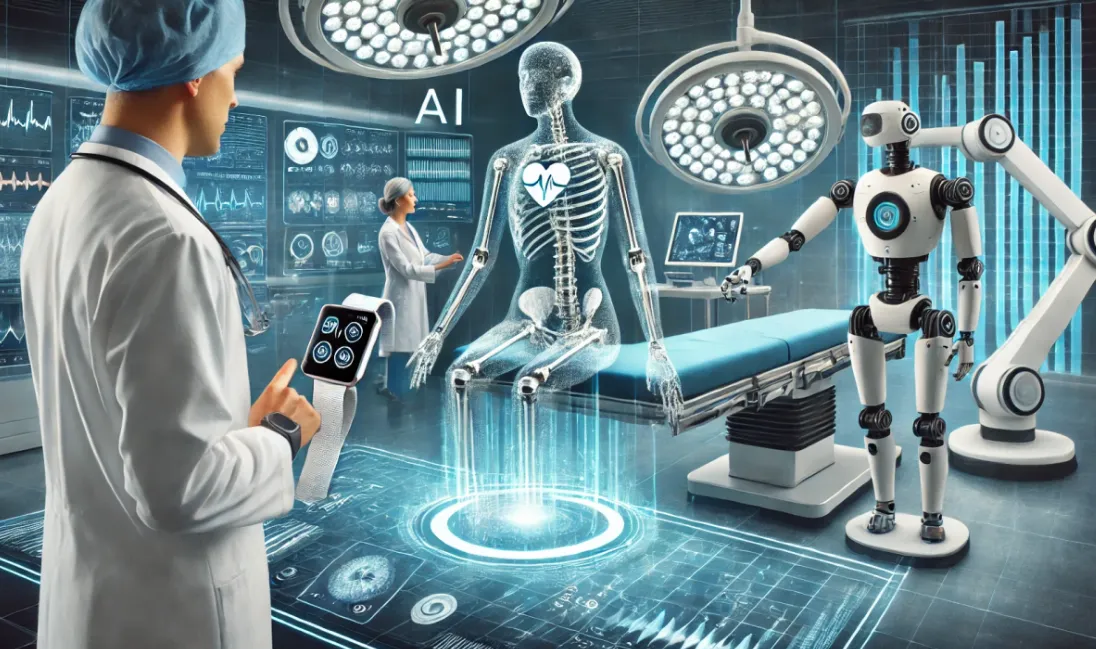
- Robotic-assisted surgeries where machines help surgeons make super-precise movements.
- Drug development, shaving years off the time it takes to find new treatments.
- Personalized care, where AI tailors treatment based on your unique genes, history, and lifestyle.
It’s not just about saving time. It’s about saving lives.
And giving people care that fits who they are.
Final Thoughts: The Human Side of Tech
I’ll be honest — I used to feel weird about machines having a role in my health. It felt cold. Impersonal. Like being diagnosed by a calculator.
But then I heard Julia’s story. And stories like hers.
And I realized something: AI isn’t replacing human care.
It’s helping make it stronger, more accurate, and more accessible.
The best version of healthcare? It’s still human.
But it’s powered by tools that help us see what we used to miss.
And maybe — just maybe — that means fewer missed diagnoses.
More second chances.
And more people like Julia walking out of hospitals with good news.