


In today’s rapidly evolving world of robotics and industrial automation, every single component counts. Among these critical pieces, beam couplings have carved out an essential place, directly impacting the accuracy, efficiency, and longevity of automated systems. These precisely engineered mechanical devices create the vital connection between motors and driven components, ensuring smooth power transmission while handling various types of misalignment that naturally occur in real-world installations.
Understanding Beam Coupling Design and Functionality
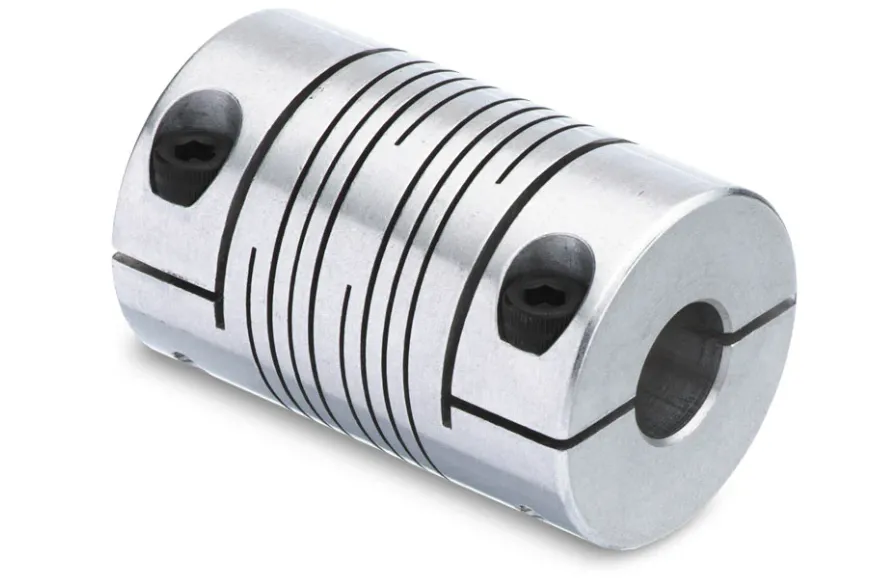
Beam couplings feature something pretty clever, a unique helical cut design that creates a single flexible beam winding around the coupling body. This provides exceptional torsional rigidity while maintaining just enough flexibility to compensate for misalignment. What does this mean in practice? The coupling can handle angular, parallel, and axial misalignment all at once, without generating the significant reaction forces that could damage your sensitive equipment.
Advantages in Servo Motor and Encoder Applications
Servo motor systems don’t forgive imprecision. They demand exceptional accuracy and responsiveness, characteristics that beam couplings deliver with remarkable consistency. The zero-backlash design ensures that every commanded motion translates directly to the driven component, without the lost motion or positioning errors that could compromise system accuracy. In encoder feedback applications, this precision becomes even more critical since the coupling must transmit rotational position information without introducing errors or signal degradation.
Impact on System Reliability and Maintenance Efficiency
The coupling technology you choose directly influences your system’s overall reliability and maintenance requirements, and beam couplings offer significant advantages in both areas. Their one-piece construction eliminates the need for periodic maintenance that’s typically associated with couplings using flexible elements, elastomers, or multiple components that can wear or require adjustment. This design simplicity translates into extended service intervals and reduced maintenance costs over the system’s operational lifetime.
The robust construction and high-quality materials used in beam couplings ensure consistent performance even in challenging environments. Temperature variations, contamination, high-cycle applications, they handle these conditions without breaking stride. By accommodating misalignment without generating harmful reaction forces, these couplings actually help extend the life of connected components, including motors, gearboxes, bearings, and driven equipment. The predictable performance characteristics and long service life contribute to improved overall equipment effectiveness and reduced total cost of ownership.
Selection Considerations for Optimal Performance
Choosing the appropriate beam coupling for a specific application requires careful consideration of multiple technical parameters and operating conditions. Torque capacity stands as the primary selection criterion, engineers need to account for both continuous operating torque and those peak torque conditions that may occur during startup, stopping, or emergency situations. Don’t just plan for normal operation; plan for the exceptions too.
The required misalignment capacity must be evaluated based on actual installation conditions and the anticipated thermal expansion or settling that may occur during operation. Speed capabilities vary among coupling designs, with maximum RPM limits determined by the coupling’s diameter, length, and material properties. Environmental factors deserve attention as well: temperature extremes, chemical exposure, washdown requirements, and potential contamination all influence material selection and protective coating choices. The coupling’s torsional stiffness should match the application’s requirements for positioning accuracy and dynamic response characteristics.
Future Trends in Coupling Technology for Automation
The ongoing evolution of robotics and industrial automation continues to drive innovation in coupling technology, with beam couplings adapting to meet increasingly demanding performance requirements. Advanced materials and manufacturing techniques now enable the production of couplings with improved strength-to-weight ratios, enhanced fatigue resistance, and superior environmental compatibility. These aren’t just incremental improvements, they’re opening up new application possibilities.
The trend toward miniaturization in robotics applications has led to the development of smaller beam couplings that maintain high performance in extremely compact packages. Integration with smart manufacturing concepts is emerging too, with some coupling designs incorporating sensors or monitoring capabilities to provide real-time performance data and predictive maintenance insights. The growing emphasis on energy efficiency throughout industrial operations has increased attention to coupling designs that minimize power losses and contribute to overall system efficiency. As collaborative robotics and flexible automation systems become more prevalent, coupling technology continues evolving to support the unique requirements of these innovative applications.
Conclusion
Beam couplings represent a critical enabling technology for modern robotics and industrial automation systems. They provide the precision, reliability, and performance characteristics that competitive manufacturing operations simply can’t do without. Their unique design combines zero backlash, excellent misalignment capacity, and exceptional torsional rigidity in a maintenance-free package that delivers consistent performance throughout an extended service life.